My portfolio serves as a place where you can find everything that I have worked on for this course throughout the semester. I have been doing a deep dive into the social, accessibility, and political issues of our times. The title, “Hiding in Plain Sight” works to connect this theme of bringing to the viewer’s attention the issues that are prevalent in society, but we may not be aware of for many reasons. Whether we are unaware of the communities affected, didn’t realize the problem existed, or didn’t think there was a problem that needed a solution in the first place, this work found in this portfolio has a deeper meaning than the creative finished product you will find below. Whether the topic of immigration, the food industry, accessibility to language or games, each project serves a deeper purpose of looking into something wrong or capable of being evolved. Have a look!
Need more information? Click on each title to read my artist statement!
The “DanceyDancey” is a mobile and more economic version of “Dance Dance Revolution that can be found in many arcades throughout the country. The name of the contraption comes from it’s arcade game mother and the MakeyMakey device that made it all possible. The purpose of this project was to explore the possibilities that could be created using economic pieces to create a game. Although there wasn’t much difference between the original and the created version for this project, the main purpose was to actually create something that could allow for more accessibility as a MakeyMakey costs much less than a gaming console and the usage of Roblox would be free for children to use in order to recreate this project.
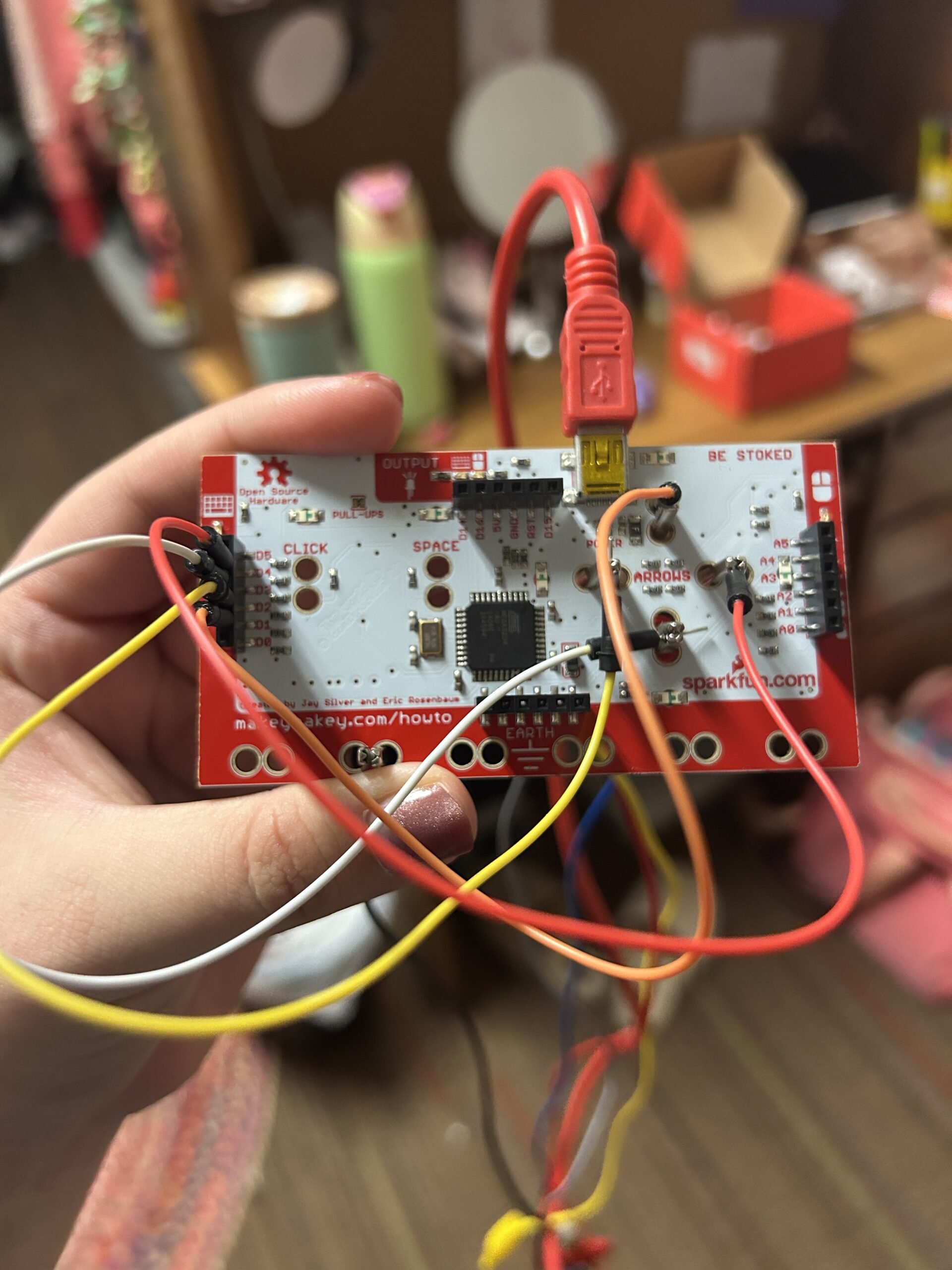
In Progress: I had to learn how to use and adapt the MakeyMakey to work for my needs. Instead of using the arrow keys, I had to rewire the MakeyMakey to use WASD instead.
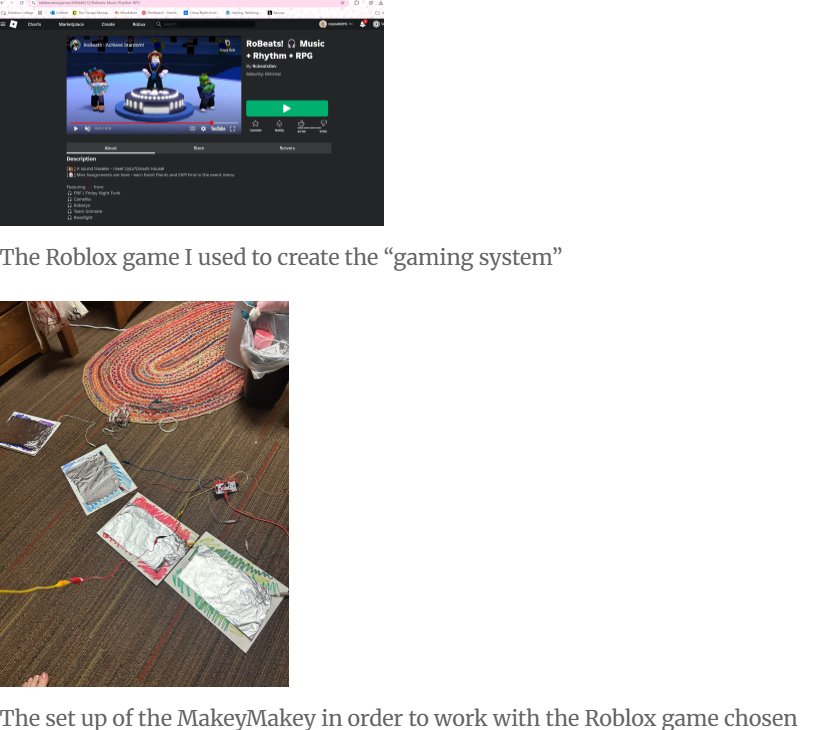
Finished Product: I used Roblox and the MakeyMakey to upgrade the already made game on the site and make it more interactive than just using your keyboard.
“Unfortunately, this week, my flog upload is about the fact that I fell ill with an upper respiratory virus that left me sick for most of the week and left me unable to do much of my work. This means I was unable to work on hack #1 because I couldn’t even muster up the energy to work on it because I had fever and more.”
“Mouse Trap” was a popular board game in the early 2000s and before that features mice building a trap and then using it against one another to win the game. This hack has evolved the game to form a statement about an issue that is occurring in society today. “House Gap” focuses on immigration into the United States, how the Latin Americans who migrate here struggle to find their communities, stabilize themselves financially, and manage their lives while under constant fear of deportation or losing all their money. Although this wouldn’t be considered a fun game to play with friends, it definitely works to bring forth conversation about these issues as some people may not know the extent to which these communities are affected.
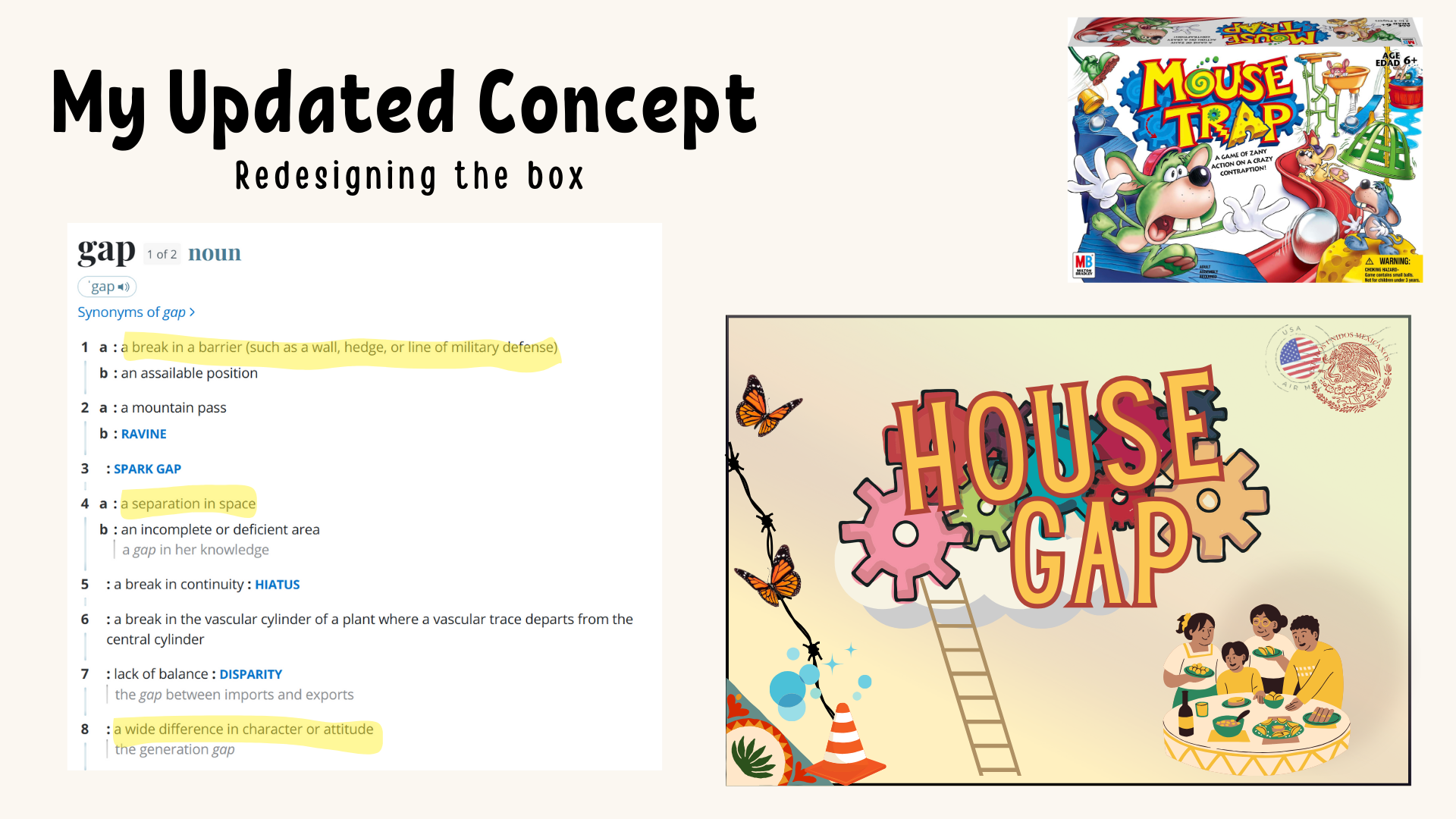
In Progress: I had to reimagine the game completely, coming up with a new name and concept of an already created game. While making my presentation, I was basically working on each piece as I went along because of Canva’s endless tools.
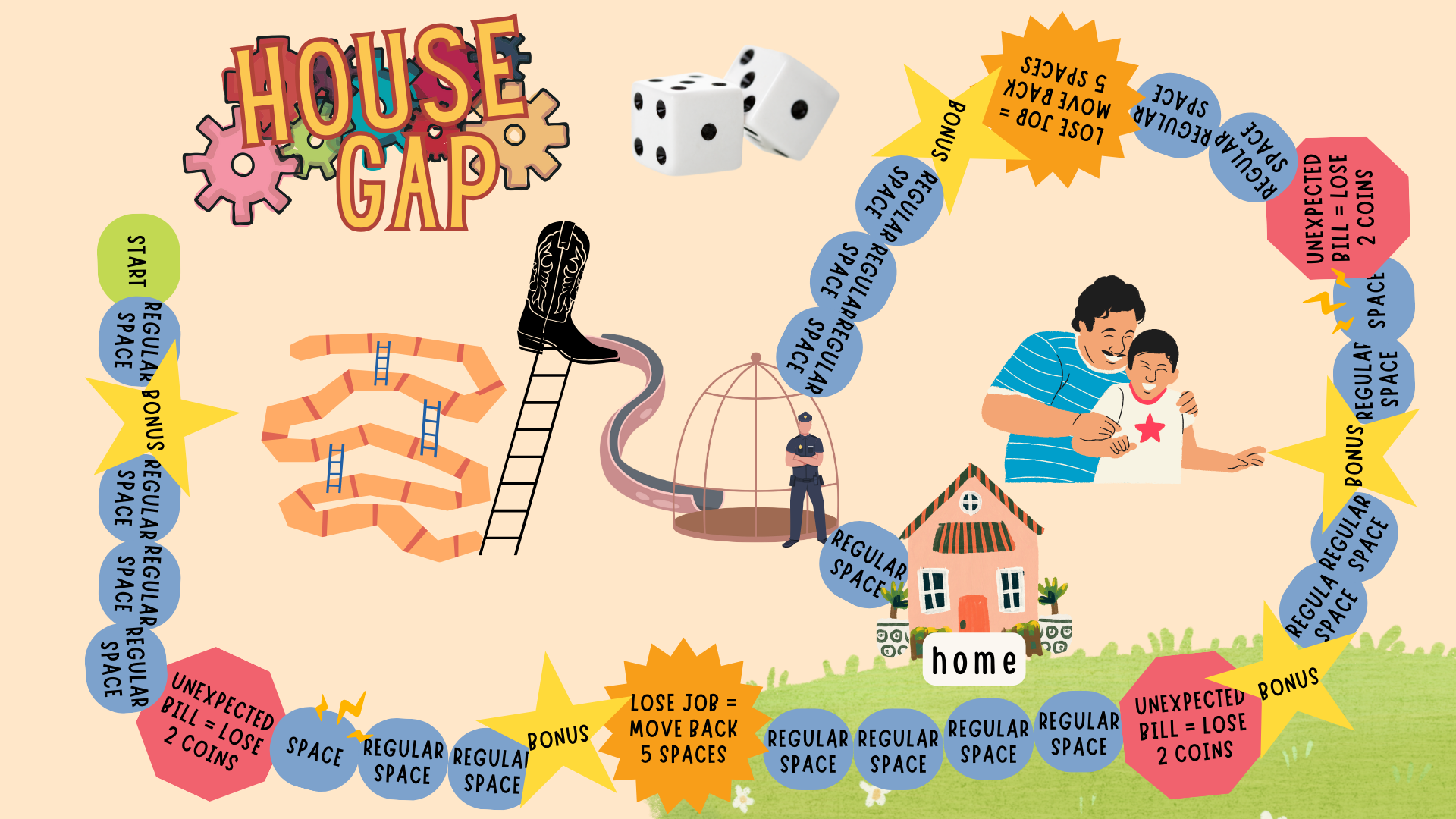
Finished Product: I created a revised board game with a new physical board to focus more on my critiques on immigrant lives in the US.
“I continued with the idea of redesigning Mouse Trap instead, which was interesting because I hadn’t realized that the game itself had been redesigned in recent years. Because of this, it was harder to find a physical version of the actual board, so I decided to do a virtual version of the game so that I could use the older version of the game as the aspect of creating the mouse trap was kind of important to my vision. However, now I’m starting to think that I could have created a version with the newer version of the game.”
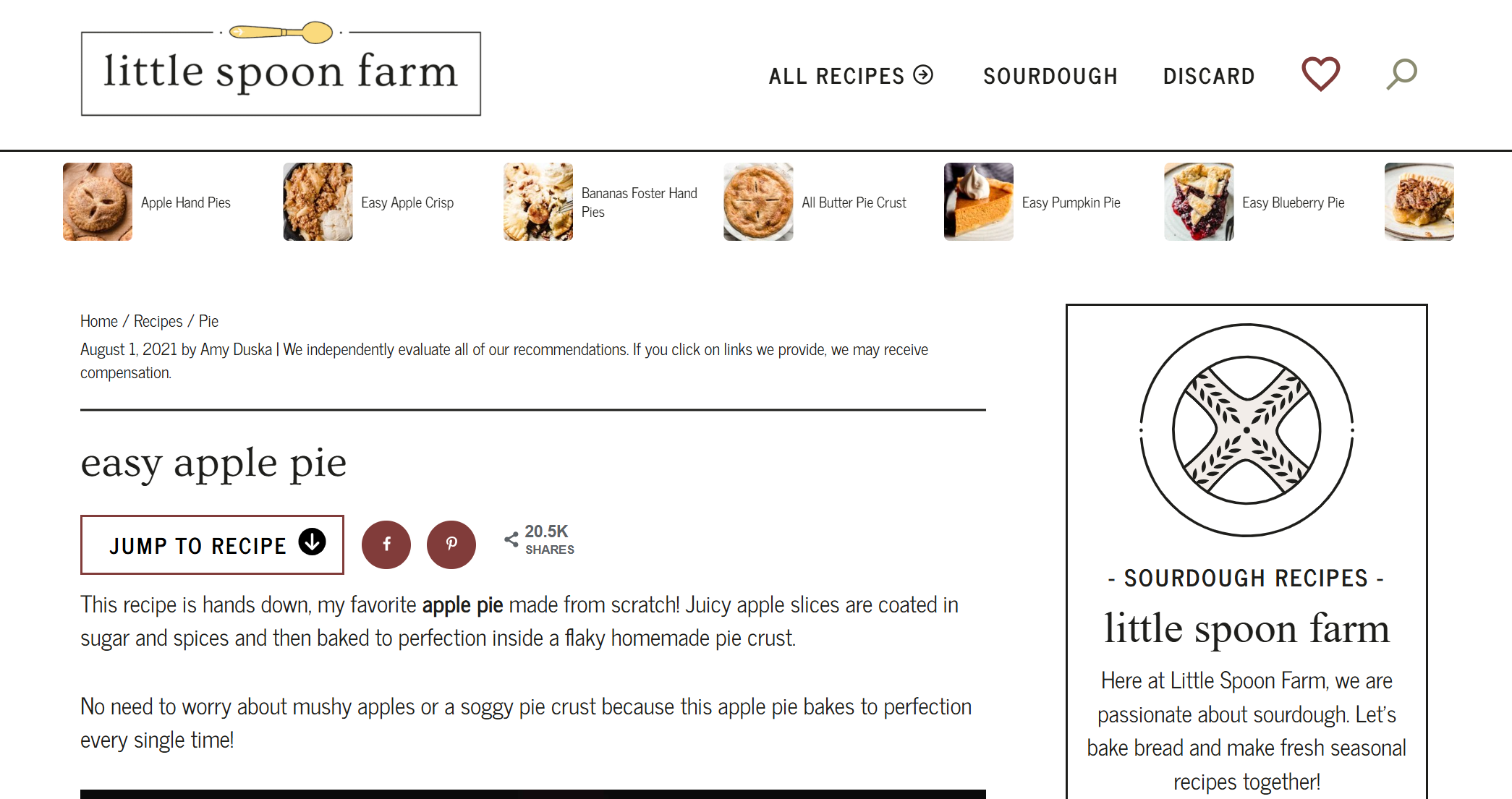
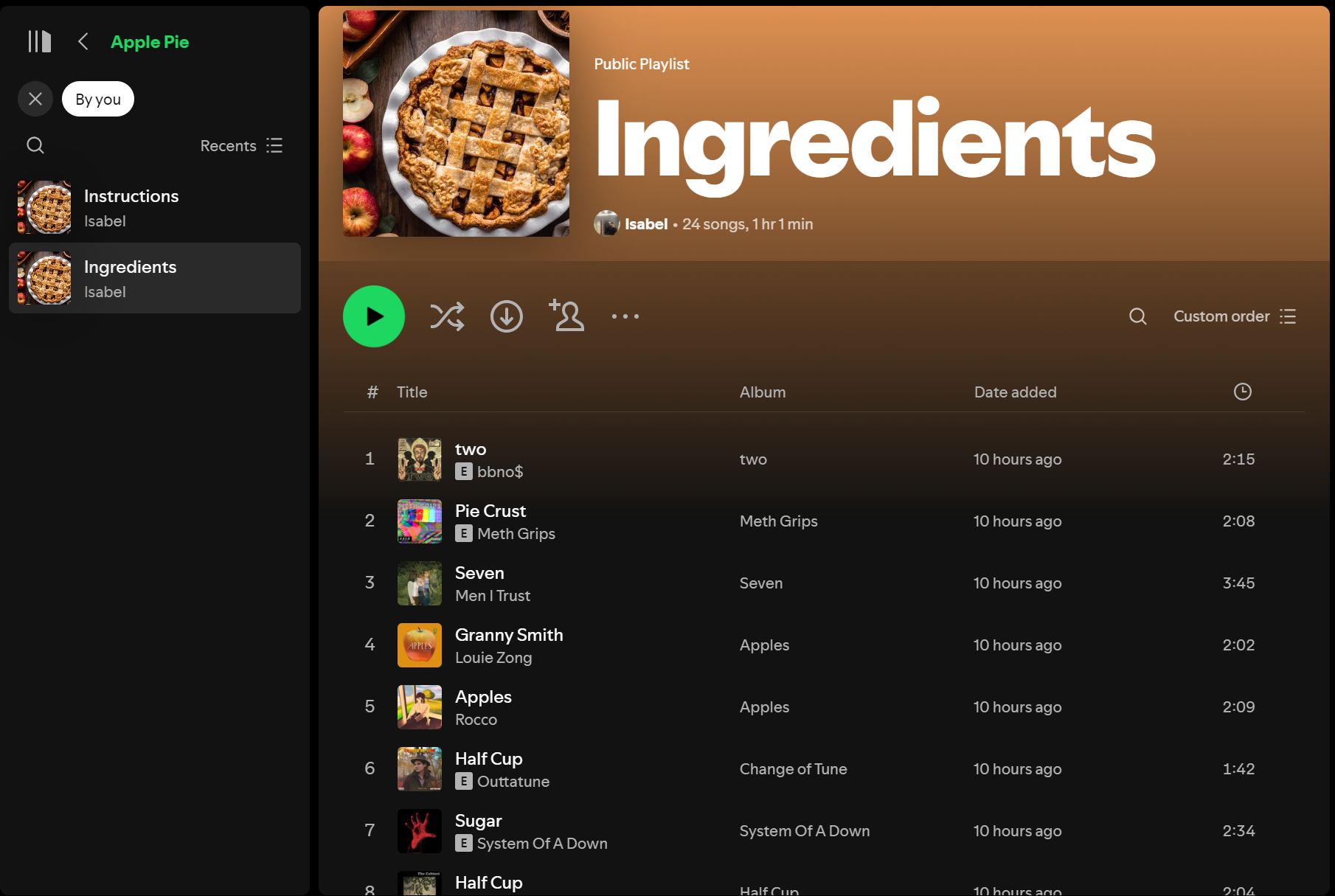
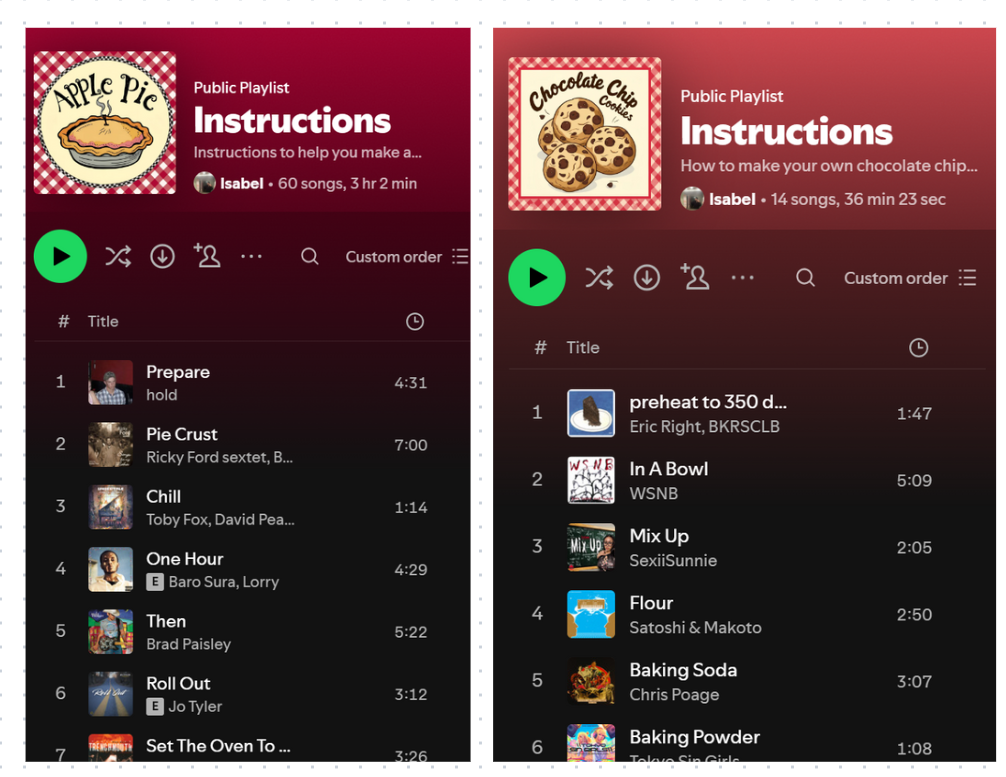
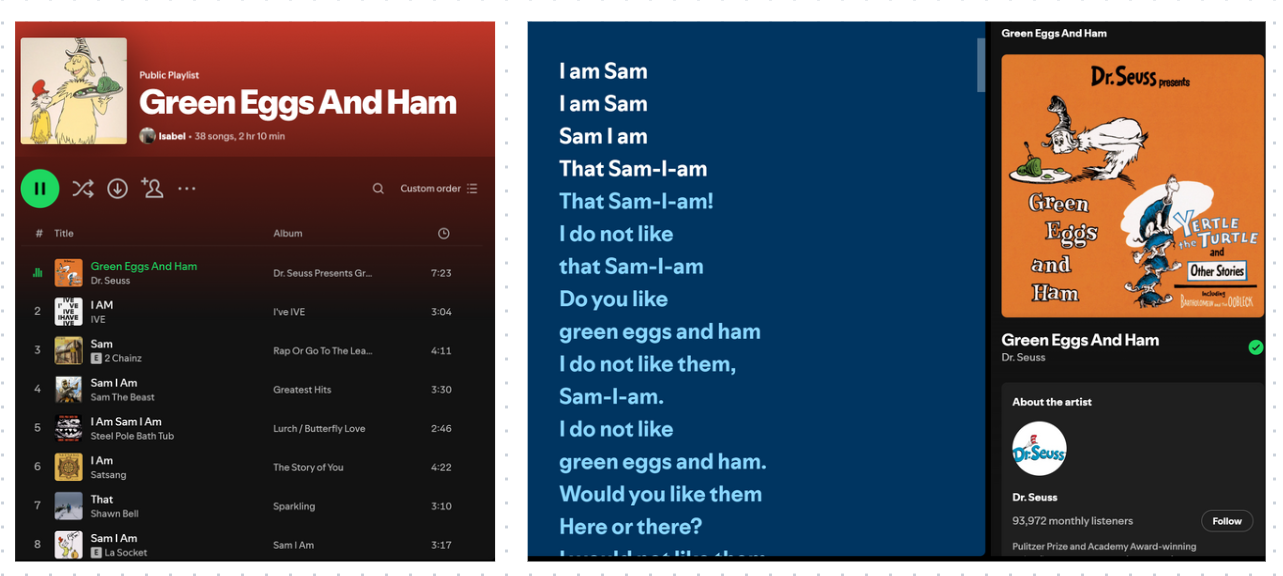
This project looked into using an already established piece of software and using it in an unexpected way. Spotify is used as a music streaming platform where listeners can listen to their favorite songs, stories, podcasts, and more without restrictions for a monthly subscription. However, this project uses Spotify in a different way that appeals to a different sense, visual. This hack uses playlists and song titles to form a recipe to make apple pie. A playlist contains the ingredients and another contains the instructions, allowing easy access to both in one space without having to scroll throughout a long page on a blog post to find either, while also providing the user to enjoy a playlist alongside the instructions.
In Progress:In order to complete this project, I had to research recipes in order to look at the formatting of ingredient lists & instructions that are typically found on baking blogs.
Finished Product: By the end of the project, I had created a folder containing two playlists, one containing the ingredients and the other the instructions to make an apple pie.
” I found it difficult to think outside of the box and use a software for a different purpose than what it is initially intended for. I think this is because many software’s are created for certain purposes, and since there are so many software’s that could be used in a better manner than the ones I was thinking of, it made it increasingly difficult to remove myself from the mindset of a consumer and instead focus on the A/B list used to design and critique work.”
This project used articles, interviews, images, advertisements, and much more and molded them into a visual form. The final product of this hack was a video that explored the food industry in the United States, and how it varies greatly from that of other countries throughout the world. Although it is difficult to look at the different health dangers that are posed due to the ingredients in American food, this project hopes to showcase the stark difference between how food companies present themselves to their audience vs what their food is actually doing to their customers. The main purpose of this short film was to bring awareness to the food industry and who it affects, the children of this country are vulnerable targets and the industry is affecting the country’s overall health all in the name of making money.
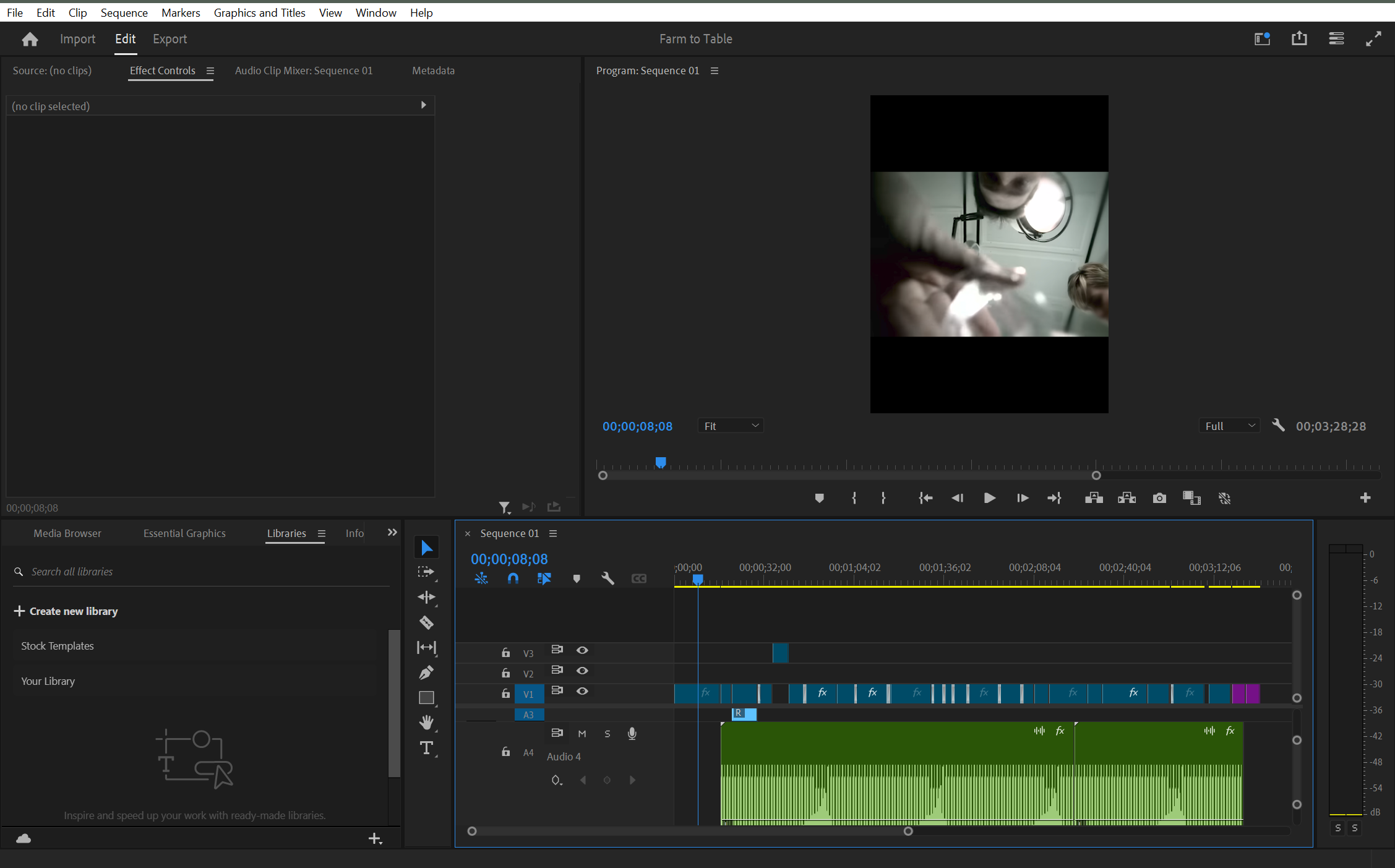
In progress: Throughout my time working on my short video, I used Premiere Pro to edit my visuals and audios together in order to form a cohesive story.
Final Product: This video showcases the stark contrast between food advertisements and how the food in America has caused many serious illness for the American people.
“I was finally able to grasp an idea for my fourth hack after talking with my group during our work day on Thursday, so that was helpful. I decided to do a piece focusing on the way food has started to cause an epidemic of obesity and other health issues, and putting this side by side with advertisements directed towards children for certain unhealthy foods to showcase how media has allowed these issues to flare up and how companies tend to lie or focus their ads towards children to sell more product without focusing on how this will affect the child’s health.” – FLOG 10
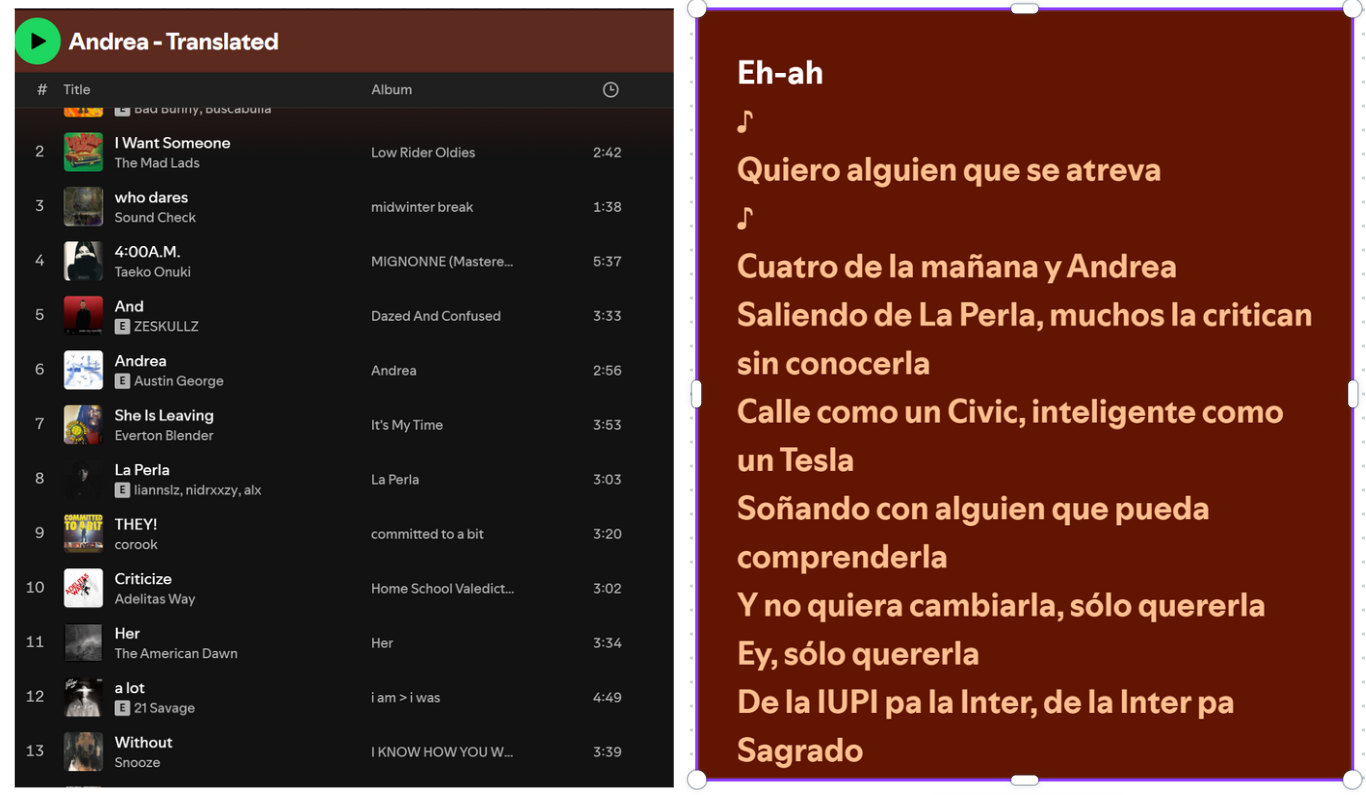
This project is an expansion of the previous hack focused on using a piece of software for a purpose other than its explicit purpose. This project expands features that can already be found on Spotify, helps with accessibility to music & artists, and uses features offered by Spotify in a new, inventive way. The finished product of this hack is the creation of a playlist that’s purpose is to translate the lyrics of a song that is completely in Spanish. This project not only is a creative way of using playlists and expanding the lyrics option of the software, but it also helps listeners access music in a new way than prior. The main purpose is to allow listeners to enjoy their favorite songs, and to help deliver an artist’s message in their music so that music can be enjoyed more.
The First Piece of My Process: I originally wanted to expand my previous hack and create a larger recipe book but realized this wouldn’t allow me to expand further more than just expand content.
The Second Piece of my Process: I then moved into storytelling using the playlists, but deemed this useless because Spotify already has a lyrics tab, but this pushed me into my final version.
Finished Design: On the lefthand side is the playlist that I created containing the translated lyrics to Bad Bunny’s “Andrea” & on the righthand side are the lyrics in their original language as is offered by Spotify.
“My biggest struggle … was trying to complete my hack because I was bouncing around from idea to idea because I felt like what I had come up with wasn’t good enough for the guidelines of this last project. So, my biggest issue was trying to think of ways to expand my project because I really wanted to take the time to try and work more with what I had previously been working with on Spotify, which is using song names and playlists in different ways than they were originally intended. At the end of the day, my final product of having the song lyrics in the playlist translate a song in a different language than its original feels like a good outcome for my project.” – FLOG 13